What do you want?
Okay, when was the last time you bought something?
Why did you buy it?
Now think deeper, why did you really buy it?
Whenever a consumer buys something, they don’t just buy it, they hire that product to do a job for them. If you hire a fry pan, why do you do it? You don’t buy it only because you want a fry pan, you need a fry pan to cook stuff. Cooking is a job that needs to be done, and you hire the pan to do it for you.
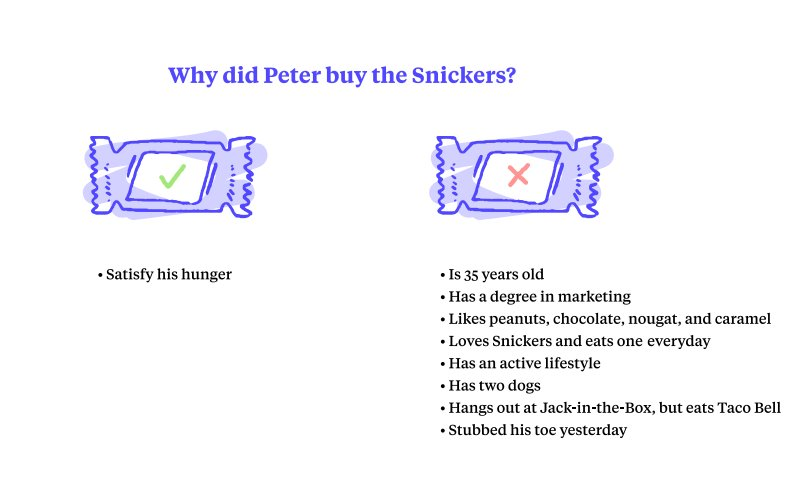
This is the basis of “Job to be done” framework, also known as JTBD Framework - our topic for today.
Jobs to be done
Below is an excerpt from a HBR article:
After decades of watching great companies fail, we’ve come to the conclusion that the focus on correlation—and on knowing more and more about customers—is taking firms in the wrong direction. What they really need to home in on is the progress that the customer is trying to make in a given circumstance—what the customer hopes to accomplish. This is what we’ve come to call thejob to be done.
JTBD framework tells us that users use products in certain situations when they want to achieve a specific outcome because of some reason that acts as their motivation.
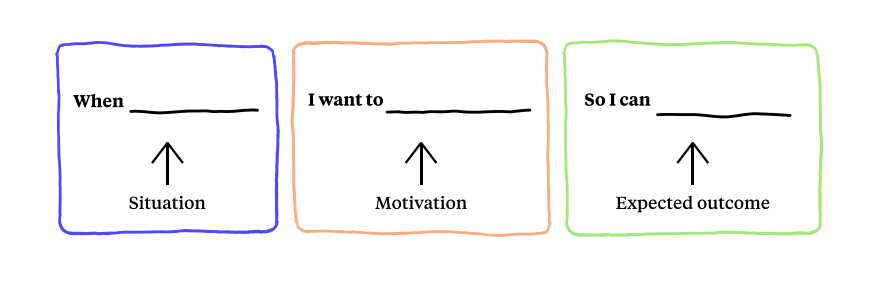
The core value of this framework is that it provides an approach to gathering an understanding of who your user is, and what their motivations and hopes are.
How to implement this framework?
Building better products start with a great JTBD statement. A jobs to be done statement concisely describes the way a particular product or service fits into a person's life to help them achieve a particular task, goal, or outcome that was previously unachievable.
Here’s a JBTD statement template that is commonly used amongst Facebook and Instagram product teams:
When I…… (context)
But…… (barrier)
Help me…. (goal)
So I….. (outcome)
With those principles and end goal in the background, follow these four steps to gather all the info you’ll need to fill out your JTBD template:
-
Start by defining your audience clearly.
Think about the defining characteristics that help you develop a crystal-clear image in your head of your audience. Without a clear definition, you risk going too broad or gathering signal from the wrong kinds of people.
-
Ground yourself in market research.
Understand as much as possible about this audience’s behavior: what they currently are using to solve this specific problem and where they feel the most pain in the customer experience.
-
Talk to your users.
Using surveys and interviews, get a firsthand account about your user’s mindset and decision process (related to what you are building).
-
Prioritize.
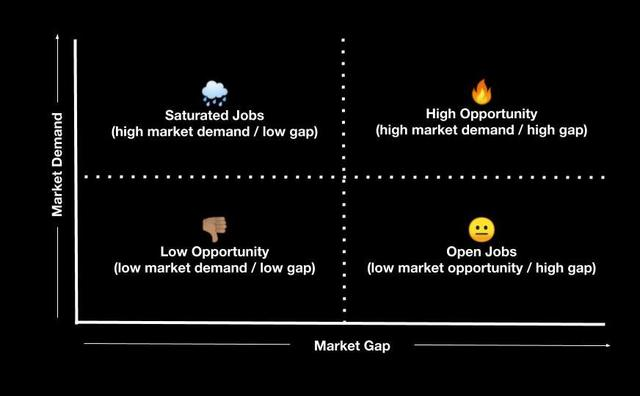
There are many customer jobs your product could tackle, but focus is paramount here. From user interviews, look for themes that emerge in jobs to be done. Narrow down jobs and prioritize those with the most demand and the largest gap to be filled.
How to think about which jobs to tackle in the JTBD framework? This image might help you.
Some examples of JTBD Statements
Discord JTBD
When I want to jump into my favorite game, but I don’t know if there are people around to play, help me safely coordinate with a group of like-minded gamers, so I can easily find a way to enjoy my favorite multiplayer game.
This suggests features like making it easy to find people through public or private servers and switching easily from text to voice chat as you organize and jump into a game.
Okay, let’s think about why are you all here? What’s your JTBD? For some it can be:
When I am exploring PM as a career
But don’t know how to do that
Help me learn Product Management
So I can build enough skill and evidence to move into a product role.
Check the quality of a JTBD statement
A useful job is stable enough to outlast one feature. It includes a situation, motivation, and desired progress without naming the solution. “When month-end bills arrive, help me understand what changed so I can adjust my spending” leaves room for many solutions; “send me a pie chart” does not.
Validate a job through real stories rather than asking users whether they like the wording. Ask about the last time they tried to make this progress, what triggered the search, what alternatives they considered, and what anxieties held them back. Then connect the strongest job to measurable outcomes and use it to evaluate product ideas.